
Friday, 30 September 2016

Monday, 26 September 2016
History of music magazines
The Billboard
The first issue of Billboard was published in Ohio, on November 1, 1894 by William Donaldson and James Hennegan. At first, it covered the advertising and bill posting industry and was called 'Billboard Advertising' but it was shortened to 'The Billboard' in 1897.As one of the oldest trade magazines, it maintains several internationally recognised music charts that track the most popular songs and albums in various categories on a weekly basis.
The target audience for 'The Billboard' magazine varies from young teens, from the age of 16, to young adults, at the age of 26.

The first issue of Billboard magazine.
Kerrang!
Kerrang! magazine was founded in 1981and is a magazine devoted to rock music. It is named after the onomatopoeic word that derives from the sound made when playing a power chord on a distorted electric guitar, Kerrang! In the early 2000s it became the best-selling British music newspaper. Launched as a monthly magazine, Kerrang! began to appear on a fortnightly basis later, and in 1987 it went weekly.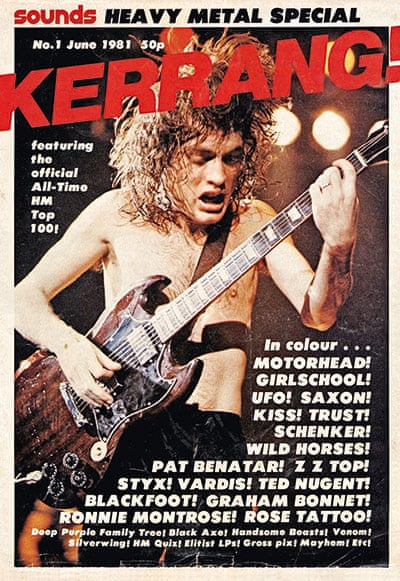
The first issue of Kerrang! magazine.
Social identity theory - tribes
Social identity theory can create different tribes because social identity is a person’s sense of who they are based on their group membership so people who like the same things, e.g. in fashion and music will get along better with each other and create different groups of people with similar interests.
Tuesday, 20 September 2016
Representation and Ideology
Representation and Ideology
Each genre has its own Ideology - a set of beliefsThe big dichotomy is between pop and rock
Ideology affects representation
Pop - conformity:
- Clean cut image - good looks key to success
- Songs about love - asexual, non-threatening
- Ability to play live is less important
- Conform to norms
- For kids
- Seen as ephemeral - here today and gone tomorrow
Rock/hip hop - rebellion:
- Can be scruffy or untidy - looks less important
- Songs about sex, anger, drugs
- Must play well live
- Non-conformist
- For Adults
- Genuine, authentic, for real
- 'Classic' - built to last
Musical genres and pop case study
Musical genres
Pop:
- Indie pop
- Dance pop
- Country pop
- Lounge music
- Pop rock
- Pop punk
- Experimental pop
- Traditional pop music
- New wave music
Rock:
- Adult Alternative Rock
- American Trad Rock
- Arena Rock
- Blues-Rock
- British Invasion
- Death Metal/Black Metal
- Glam Rock
- Hair Metal
- Hard Rock
- Metal
- Jam Bands
- Prog-Rock/Art Rock
- Psychedelic
- Rock & Roll
- Rockabilly
- Roots Rock
- Singer/Songwriter
- Southern Rock
- Surf
- Tex-Mex
Pop music background information
Pop music is a genre of popular music which originated in the 1950s, deriving from rock and roll. Although pop music is seen as just the singles charts, it is not the sum of all chart music. "Pop music" may be used to describe a distinct genre, aimed at a youth market, often characterized as a softer alternative to rock and roll. In the 2000s, three trends affected pop music: declining sales of CDs, online piracy of digital files of songs, and the growth of pop careers launched through televised talent shows such as Pop Idol in the UK and similar versions in various countries.
Some examples of pop music artists are; Justin Bieber, Drake, Adele, SIA, etc.
Tuesday, 6 September 2016


Subscribe to:
Posts (Atom)